Tag: my lab data

  • Statins + Diet: How Much Each Changed My Cholesterol

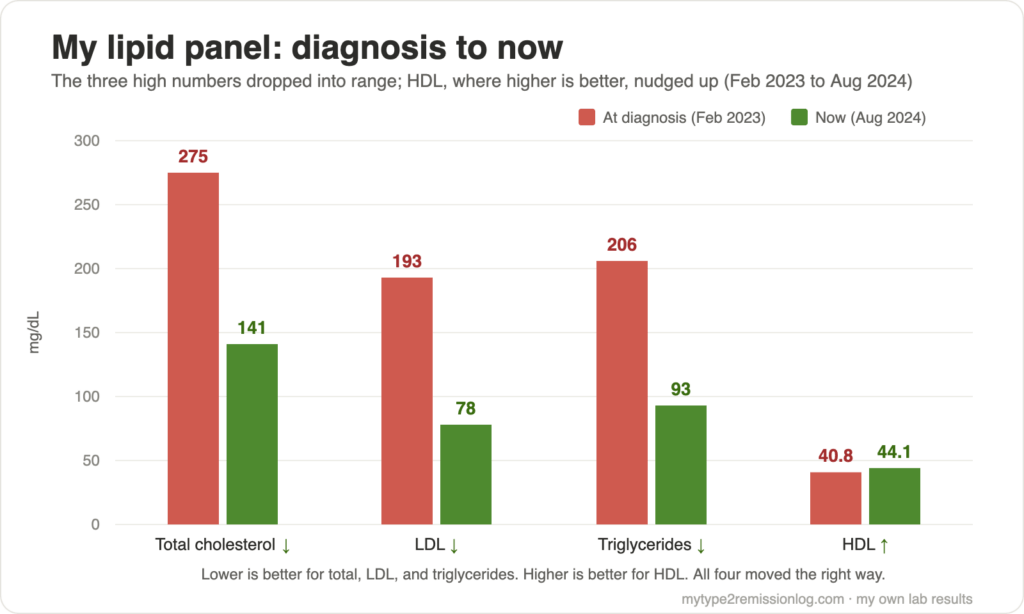
    Short answer: My cholesterol numbers all normalized, total from 275 to 141, LDL from 193 to 78, and triglycerides from 206 to 93, but I take a statin (atorvastatin), so I can’t claim diet did it alone. My read on my own data: the statin deserves credit for the LDL drop, while the dramatic triglyceride fall tracks closely with the low-carb diet and weight loss. You can’t cleanly separate these, but the medication was part of it.

    My lipid numbers, before and after

    • Total cholesterol: 275 → 141
    • LDL: 193 → 78
    • Triglycerides: 206 → 93
    statins diet how much each changed my cholesterol

    Every number moved into a healthier range. The question is why. → My full lab history.

    What the statin likely did

    Statins are specifically effective at lowering LDL cholesterol, and I started atorvastatin around my diagnosis. Given that, I don’t credit my LDL drop from 193 to 78 entirely to diet. The statin is doing work there.

    What the diet and weight loss likely did

    Triglycerides are strongly influenced by carbohydrate intake and weight, and mine fell from 206 to 93. That kind of triglyceride improvement tracks closely with cutting carbohydrates and losing 131 pounds, which is exactly what I did. So while the statin gets credit for the LDL, I give the diet and weight loss real credit for the triglyceride collapse and the overall metabolic picture. → How I lost 131 pounds

    Why I won’t oversimplify this

    It would be easy to say, “I fixed my cholesterol with diet”; it wouldn’t be true. I take a statin, and the accurate version is that diet and weight loss transformed my metabolic health, and a medication is helping with my LDL. Both are true. → Did metformin or diet lower my A1C?

    FAQ

    Did diet or the statin lower your cholesterol? Both. I credit the statin for much of the LDL drop and the low-carb diet plus weight loss for the large triglyceride improvement.

    What were your cholesterol numbers? Total 275 to 141, LDL 193 to 78, and triglycerides 206 to 93.

    Can diet alone normalize cholesterol? I can’t say for sure. I take a statin, so my case isn’t a clean test of diet alone, but numerous others have normalized cholesterol with diet only.
  • The Type 2 Diabetes Symptoms I Ignored for Months (My Honest Story)

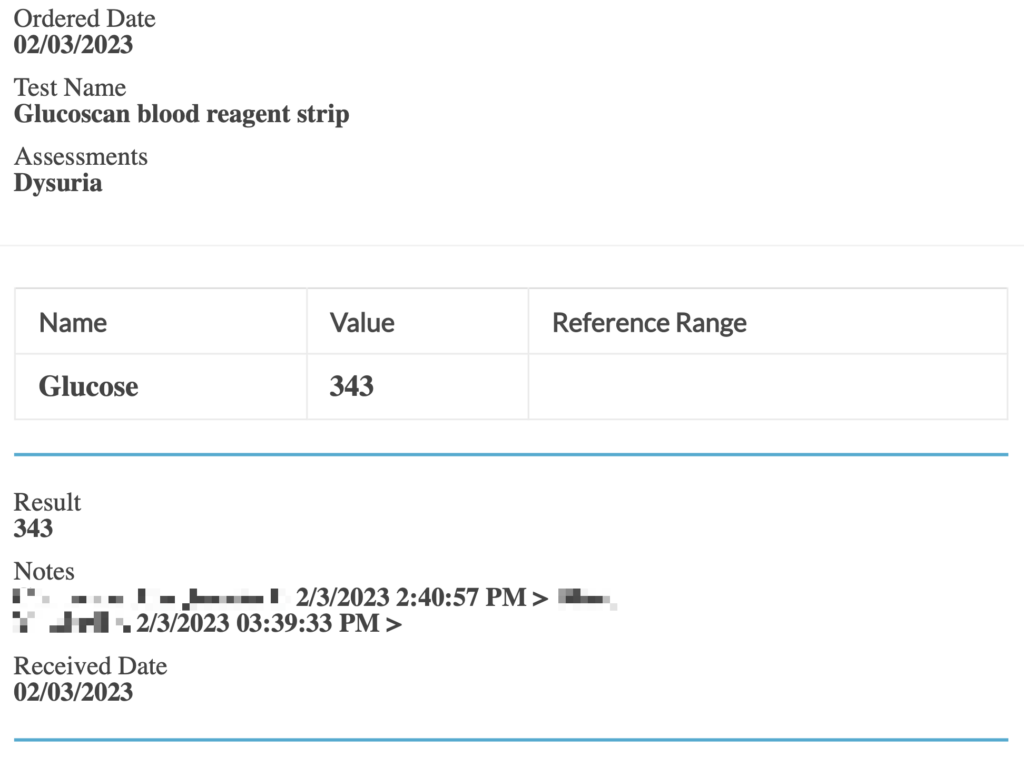
    Short answer: For months before my type 2 diabetes diagnosis, I had symptoms I dismissed or was too embarrassed to mention: constant fatigue, frequent and nighttime urination, intense thirst, and genital irritation. I assumed it was a UTI or an STD (somehow!). It was high blood sugar; my reading at diagnosis was 343. These are recognized signs of type 2 diabetes, and a simple blood test is all it took to find out.

    Why didn’t I notice something was wrong?

    Because feeling bad was my normal. For years I was tired, achy, and run down, so when new symptoms crept in, they blended into a low baseline I’d stopped questioning. That’s the trap with type 2 diabetes; it often arrives slowly, and if you already don’t feel great, the warning signs don’t stand out. Mine built up over years before the day I finally felt like something was seriously wrong.

    What symptoms did I actually have?

    Honestly, including the embarrassing ones: persistent fatigue that sleep didn’t fix and frequent urination, especially getting up through the night. One morning I even wet the bed as a grown man, experiencing intense thirst and genital symptoms like skin irritation, redness, and soreness. The genital and urinary symptoms were what scared me into going in, and they’re exactly what I was most ashamed to describe to anyone. Silly, right? I know, but that was where I was at the time.

    What did I think it was?

    A urinary tract infection or possibly a sexually transmitted infection, although I am not sure how that would have happened. Diabetes genuinely never crossed my mind. My embarrassment sent my thinking everywhere except the actual cause, which is part of why I waited far longer than I should have to get checked.

    Are these actually symptoms of diabetes?

    Yes. Frequent urination, especially at night, plus heavy thirst, fatigue, blurred vision, slow-healing cuts, and recurring genital or urinary infections are all symptoms of high blood sugar. I had most of them. I just wish I’d gone in sooner.

    What finally happened?

    The day I felt truly awful, chest tight, breathing fast, I went to urgent care. I forced myself to describe everything, embarrassment and all. They did a finger-stick: 343. The doctor told me that number meant I was diabetic, and it was one of the highest he’d seen. As frightening as it was, that test was the beginning of getting my life back.

    What I’d tell you if you have these symptoms

    Don’t sit in shame for years or months like I did. A blood sugar test is a finger-stick and takes a few minutes. If any of this sounds familiar, see a doctor and ask to have your blood sugar checked now!

    FAQ

    What are common early symptoms of type 2 diabetes? Frequent urination (especially at night), excessive thirst, fatigue, blurred vision, slow healing, and recurrent genital/urinary infections are recognized signs of high blood sugar.

    Can diabetes cause genital symptoms? High blood sugar can cause genital irritation and recurring infections. It was one of my ugliest symptoms and one of the hardest to talk about.

    Can type 2 diabetes cause bed-wetting or night-time urination? Excessive and night-time urination is a recognized symptom of high blood sugar. It happened to me.

    What blood sugar level indicates diabetes? So there’s a scale. A fasting glucose reading of 99 or below is normal, 100 to 125 is prediabetes, and 126 or higher is diabetes. Mine was a random test, not a fasting one. Mine came back at 343. There was no question which side of the line I was on.

  • The Truth: How I Lowered My A1C From 12.5% to 5.8% in Under a Year

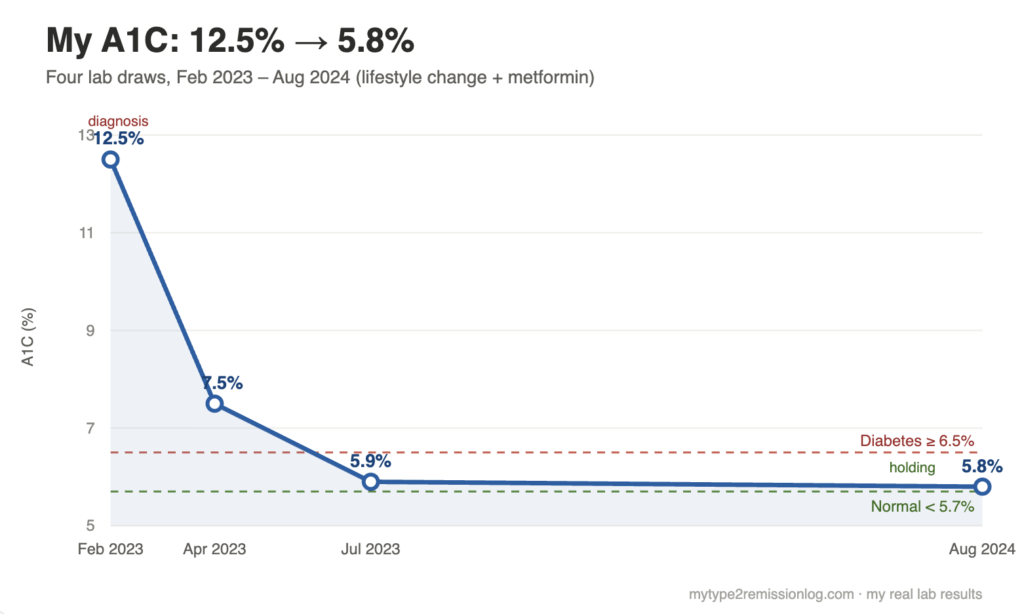
    Short answer: In February 2023, I was diagnosed with type 2 diabetes with an A1C of 12.5% and a blood sugar of 343. By cutting carbohydrates, losing weight, and tracking every number, my A1C dropped to 7.5% in about 60 days and to 5.8% by 2024, where it has stayed. I did it without Ozempic or Mounjaro (though I did reluctantly start metformin). The journey of getting my A1C From 12.5% to 5.8% has transformed my health, and I’ll share how I lowered my A1C.

    My glucose numbers have been holding steady since. However, I have not had a lab-based A1C reading since. That changes in September when I finally get back to the doctor.

    how I lowered my a1c

    What were my numbers at diagnosis?

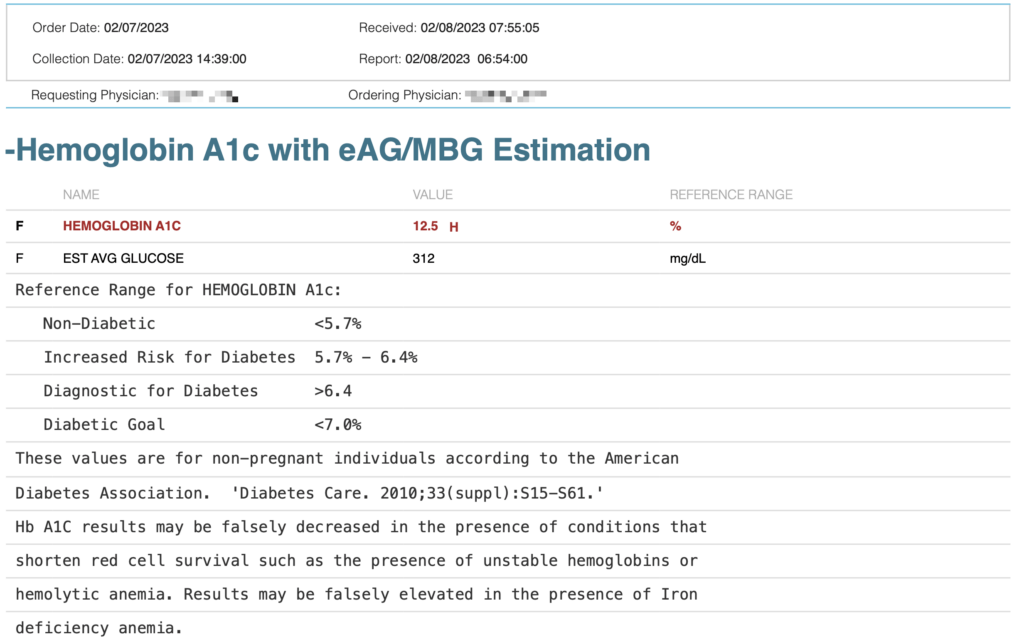
    On February 3, 2023, I went to urgent care feeling like I was dying. My finger-stick blood sugar was 343. Four days later my full labs came back: A1C 12.5%, fasting glucose 207, total cholesterol 275, LDL 193, and triglycerides 206. The doctor said 343 was one of the highest readings he’d seen. Those numbers are my baseline, the “before” against which everything else on this site is measured.

    Why did this scare me so much?

    My father died from complications of diabetes at 57. My uncle lost toes, then his foot, then part of his leg. I was 54 at diagnosis. In my head, that gave me about three years to turn things around, and the fear of repeating my family’s history is exactly what made me act instead of waiting. I’m 58 now and still here. Healthier than I’ve ever been!

    What did I actually change?

    I cut carbohydrates hard, prioritized protein and good fats, dropped sugar and soda, and measured my blood glucose 8 times every single day. The framework that made it click for me came from a talk by Dr. Sarah Hallberg: treat the cause, insulin resistance, not just the symptom. It’s what I did, and I tracked the results so I’d know fast if it wasn’t working.

    How fast did my A1C drop?

    Fast. My A1C went from 12.5% to 7.5% in about 60 days, then to 5.9% by mid-2023 and 5.8% by 2024. A very high starting A1C can fall quickly at first, and I was also on metformin, which helps. But metformin alone doesn’t take anyone from 12.5 to 5.8, and no medication dropped my 131 pounds. The bulk of the change was the diet, exercise, and weight loss.

    Am I “in remission”?

    Not by the strict definition yet. Clinically, remission means holding a normal A1C without glucose-lowering medication, and I’m still on metformin. So I’m well-controlled, and “remission” is the goal I’m working toward with my doctor. This site is the honest log of that journey, including the part where I ask my doctor if I’ve worked my way off the metformin.

    Where to start on this site

    FAQ

    What was my A1C at diagnosis? 12.5%, with a finger-stick blood sugar of 343, in February 2023.

    How long did it take to lower my A1C? About 60 days to go from 12.5% to 7.5%, and roughly 18 months to reach 5.8%, where it has held.

    Did I use Ozempic or Mounjaro? No. My doctor pushed Ozempic at diagnosis, and I declined. I did reluctantly start metformin, which I regret, but that’s just how my brain works. How you handle this is, of course, up to you.

    How much weight did I lose? 131 pounds; from a peak of 356 down to 225.

  • Did metformin or diet lower my A1C? The truth.

    So, did metformin or diet lower my A1C? Short answer: Both helped, but the math points clearly to diet and weight loss doing most of the work. Metformin typically lowers A1C by roughly 1 to 1.5 percentage points on its own, per published clinical data.

    My A1C fell 6.7 points from 12.5% to 5.8%, and no medication caused my 100+ pound weight loss. I do take metformin, but it can’t account for most of my results.

    What metformin typically does

    Metformin is a well-studied diabetes medication, and the research generally credits it with lowering A1C by about 1 to 1.5 percentage points. That’s meaningful, but it’s a fraction of my total drop. If metformin had been the whole story, I’d expect to have landed somewhere around 11%, not 5.8%.

    The math on my numbers

    • Total drop: 12.5% → 5.8% = 6.7 percentage points
    • What metformin typically explains: ~1 to 1.5 points
    • The remaining ~5+ points: the diet, the carb reduction, and 100+ pounds of weight loss

    I can’t assign these with lab precision; nobody can split them perfectly, but the gap between what metformin does on its own and what actually happened is too large to attribute to the pill. → How I got my A1C from 12.5 to 5.8

    The part medication definitely didn’t do

    No medication dropped my weight. I went from a peak of 356 pounds (before my diagnosis) to 225, 131 pounds, and that came from how I ate and how I moved, full stop. Weight loss and the carb reduction that drove it are, in my reading of my own data, the engine here. → How I lost 131 pounds

    Why I’m careful about this

    I’m not anti-medication, and I’m not telling anyone the metformin “didn’t matter.” It’s part of the full picture. But the reason this question matters to me is that I’m working toward full remission; which by definition means holding a normal A1C without glucose-lowering medication. To know if that’s possible, I have to be clear-eyed about how much of my result is the diet versus the drug. → [link: Can you get off metformin?]

    FAQ

    Does metformin or diet lower A1C more? Metformin typically lowers A1C ~1 to 1.5 points; my total drop was 6.7 points and included 131 lbs of weight loss, so diet and weight loss did most of it in my case.

    How much does metformin lower A1C? Published data generally cites about 1 to 1.5 percentage points. Ask your doctor about your situation.

    Can diet alone lower A1C? Diet and weight loss did the bulk of mine, alongside metformin. For me, yes. What it does for you, I can’t say.

  • My Full Lab History, Diagnosis to Now

    Here is every key verifiable number from my full lab history in one place. At diagnosis in February 2023: A1C 12.5%, fasting glucose 207, total cholesterol 275, LDL 193, triglycerides 206, and weight 327.6 lbs. Last lab result in August 2024: A1C 5.8%, fasting glucose 109, cholesterol 141, LDL 78, triglycerides 93, and weight 225. Today, June 7th, 2026: A1C (not lab-verified, but my own numbers say 5.6) and fasting glucose 98. I don’t have cholesterol or triglyceride numbers, but I’m not sure why they’d have changed; my weight is 224.

    This is my actual data, the whole point of this site.

    The numbers at diagnosis (February 2023)

    • A1C: 12.5%
    • Fasting glucose: 207 mg/dL (finger-stick that day: 343)
    • Total cholesterol: 275
    • LDL: 193
    • Triglycerides: 206
    • Weight: 327.6 lbs (peak was 356); BMI: ~41

    The A1C trajectory

    • Feb 2023: 12.5% (diagnosis)
    • ~April 2023: 7.5%
    • Mid-2023: 5.9%
    • 2024: 5.8% — held since

    Where everything stands now. New numbers coming September 2026

    • A1C: 5.6%
    • Fasting glucose: 98 mg/dL
    • Total cholesterol: No way of knowing with certainty
    • LDL: No way of knowing with certainty
    • Triglycerides: No way of knowing with certainty
    • Weight: 224 lbs (−131 from peak)

    What this data does and doesn’t show

    Two things. First, I’m on metformin, atorvastatin, and lisinopril. So, for me, this is what lifestyle change plus medication looks like, not lifestyle alone. Second, the lipid improvements owe something to the statin, while the triglyceride and blood-sugar changes track closely with diet and weight loss. → Statin vs diet cholesterol · → Did metformin or diet lower my A1C?

    Why I put it all on screen

    I put every lab on one screen so you can see the real trend, and so I have to keep showing up to it. One result is a snapshot; the whole row is the story. → [link: Why I keep copies of all my lab results]

    FAQ

    What were your diabetes numbers at diagnosis? A1C 12.5%, fasting glucose 207, total cholesterol 275, LDL 193, triglycerides 206, weight 327.6 lbs, in February 2023.

    What are your numbers now? A1C 5.8%, fasting glucose 109, cholesterol 141, LDL 78, triglycerides 93, and weight 225.

    Did you do this without medication? No. I take metformin, atorvastatin, and lisinopril. I did it without Ozempic or insulin, alongside diet and weight loss. I am looking to speak with my doctor about stopping some or all medications. Stay posted!

    Is this medical advice? No. It’s my own documented lab data, for information only.